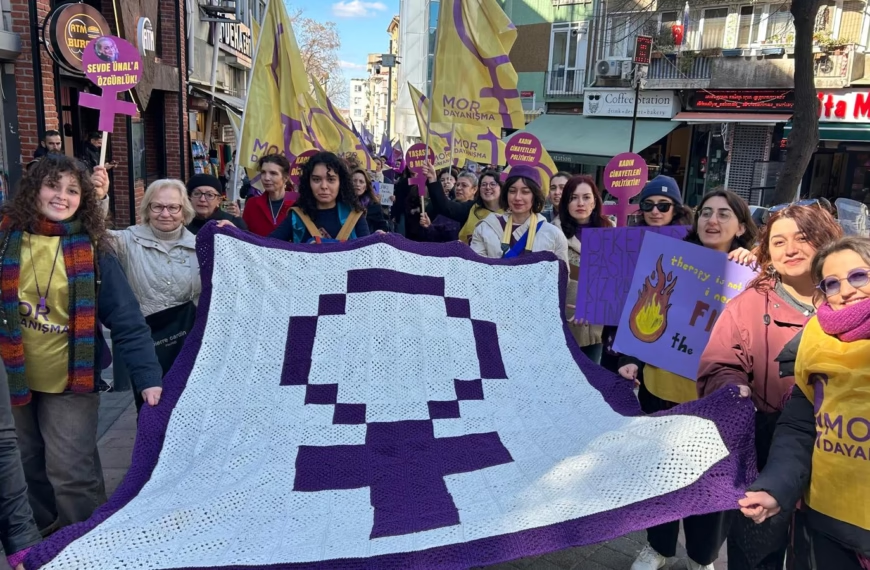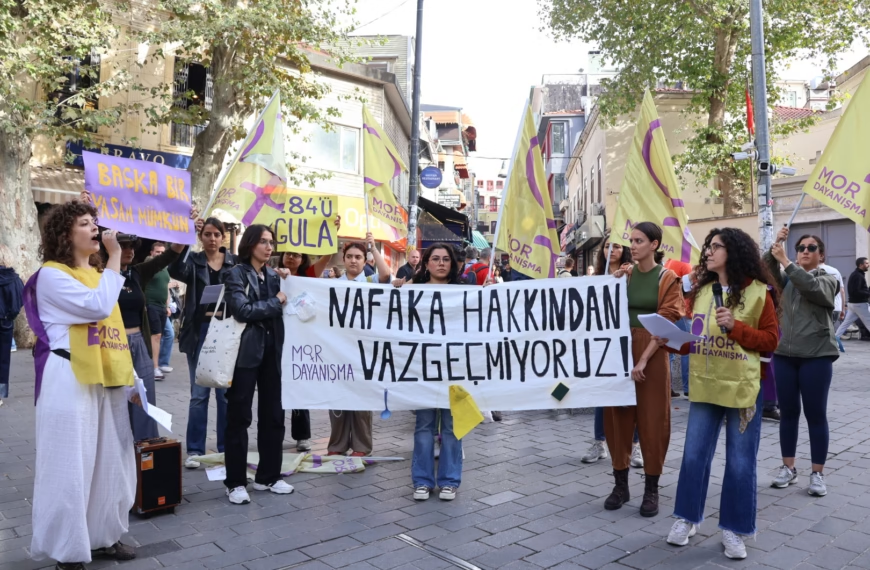
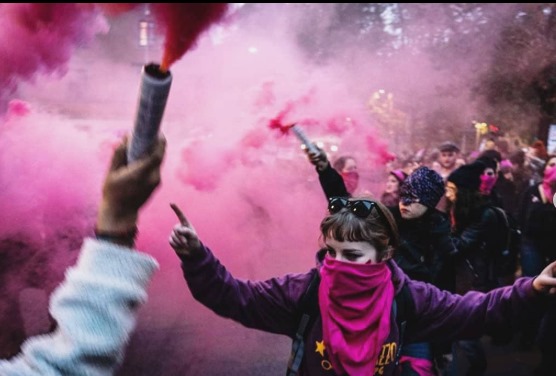

We feminists know that the women's liberation struggle transcends borders, classes and nationalities. Today, women in many parts of the world are facing attacks by patriarchal capitalism and fascist governments. On the one hand, there are right-wing and reactionary forces trying to usurp our gains, and on the other hand, there are women all over the world who are growing the resistance.
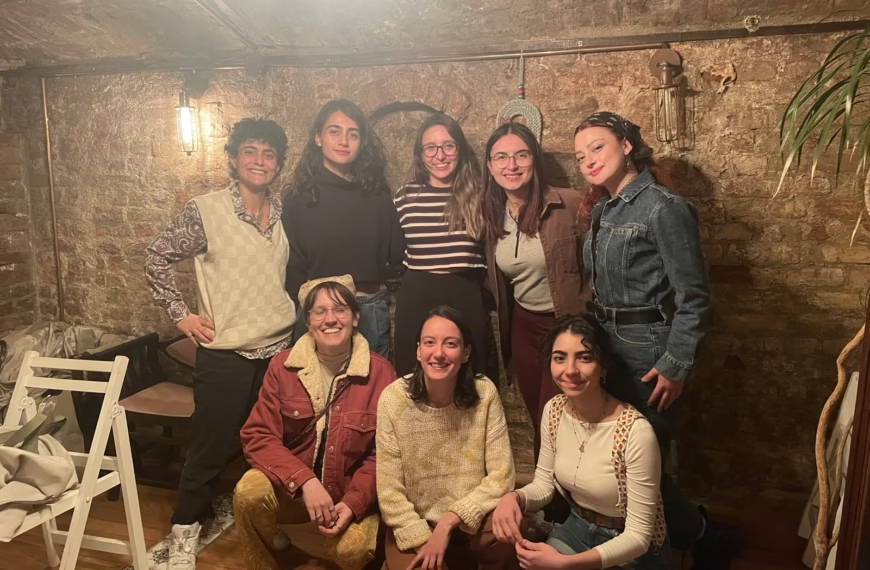
As Purple Solidarity, we came together with Irene Galuppo, one of our sisters who raised feminist resistance in Italy, to talk about today's struggle. İtalya’da feminist mücadeleyi büyüten yol arkadaşımız Irene Galuppo ile mücadelenin bugününü konuşmak için bir araya geldik.
Umay: Hi Irene, can you tell us a little bit about yourself and how your path crossed with Potere al Popolo1?
Irene: Sure! My name is Irene Galuppo, I'm 25 years old and I'm a PhD student. I study the history of contemporary art, with a particular focus on the relationship between art and politics. I started in politics in the student union, but I left in reaction to the union's pro-boss policies. Afterwards I continued my political struggle in an independent circle where we had feminist and libertarian debates.
When Potere al Popolo was founded in 2018, I did not vote because I had little faith in electoral politics. But when I moved to Naples and met the Collettivo Autorganizzato Universitario (CAU)2 at university, I got involved in Potere al Popolo. I have been active in both CAU and the party for six years since then. Potere al Popolo has been a home for me in the struggle.
"We also fight for feminist and ecological cities."
Umay: How would you describe Potere al Popolo as an organization? What are its core values and goals? How does it deal with issues such as gender equality and women's rights?
Irene: Potere al Popolo is a radical left communist organization. It was founded at a time when politics in Italy was caught between the right and the liberal left, when there was no real alternative for the left. Today, the right-wing Giorgia Meloni6 is in power, but the ground has been prepared for years by the policies of the liberal left, which opened up space for the right. Privatized health and education services, slashed budgets for women's centres, slashed workers' rights and increased economic inequalities are the results of this process.
The country has been in crisis for the last 20 years and there is still no minimum wage law. There are big differences between Northern and Southern Italy in terms of unemployment and women's employment. Women are particularly concentrated in precarious, low-paid and long-hour jobs.
We, Potere al Popolo, are an alternative to the right and liberalism. We advocate for more taxes on the rich and more resources for the poor and for public services. We want the minimum wage to be legalized because it is essential for people to be paid for their labor and to be protected against economic exploitation. We also fight for feminist and ecological cities. We demand the expansion of public services such as health care, public transportation, women's shelters and schools that everyone can access for free.
Umay: After hearing this, I wonder; how do women live in today's Italy, what problems do they struggle with?
Irene: Irene: Women in Italy are still struggling with many challenges. In 2023, according to the Global Gender Gap Report published by the World Economic Forum in 2023, Italy dropped from 63rd to 79th place out of 146 countries. This is a serious decline. Women make up about 41.9% of the workforce, but their presence in leadership positions is very low. The proportion of women in managerial positions is only 32.3%. For example, while men earn 8.2% more than women at the start of their careers, the gap increases to 24.4% for workers over 50. Women are more likely to work in precarious jobs and often have to work on part-time contracts. They are mostly in low-paid sectors, such as restaurant and housing services. Working conditions are worse for women in this sector, especially in the south.
Women's domestic and care labor aggravates this picture. Patriarchal structures still turn women into an invisible labor force within the home. Women work a second shift at home after work. This limits women's personal time and participation in education and political activities.
Umay: What is the situation in terms of access to health services and care?
Irene: There are serious inequalities in access to health care and this further disadvantages women. Due to income inequality and limited access to education, women, especially poor and migrant women, have more difficulty accessing health services. This has serious consequences not only for physical health, but also for mental and reproductive health. Many women are excluded from basic health services depending on where they live and their social status.
Umay: I think one of these problems in access to health services is access to the right to abortion. What is the situation in hospitals regarding abortion?
Irene: Despite being a legal right, access to abortion is very limited in practice. Most of the health workers are conscientious objectors. Right-wing anti-abortion rhetoric makes the situation even more difficult. Many women have to travel to other cities or go to private clinics. This effectively turns abortion into a matter of privilege.

" We believe that feminism cannot be separated from the communist struggle. "
Umay: What kind of women's struggle is Potere al Popolo waging against this picture?
Irene: Irene: First of all, I must say that Potere al Popolo is a feminist organization. We believe that feminism cannot be separated from the communist struggle. Our party's national coordination is made up of 50% women and 60% of our members are women. At the local level, we are also building structures that support women's organizing, such as People's Houses, and we are trying to increase the visibility of women in leadership positions.
Our feminist perspective is based not only on women's equality, but also on the fight against class exploitation and discrimination against migrant women and ethnic minorities. For us, feminism also includes the socialization of care work, the opening of free and quality daycare centres, the spreading of the burden of domestic labour across society and the breaking of the effects of patriarchy in everyday life. Therefore, we define ourselves as having a trans feminist perspective.
Potere al Popolo not only defends women's rights, but also develops concrete policies to do so. We stand for the guarantee of the secularism of the state and against the interference of the Church in Italian law. We demand the abolition of funding for the Catholic Church and the replacement of religious education with intercultural education in schools. We also want an end to any religious interference in health care, for example, we think that the right to conscientious objection to abortion should be abolished.
Equal rights and equal wages are among our basic demands. We believe that everyone should have equal access to employment, regardless of gender identity and sexual orientation. We also advocate for social rights such as menstrual leave to be guaranteed for women. We demand guaranteed income for poor women to maintain custody of their children. We demand legal regulations to protect women and LGBTQIA+ individuals against all forms of violence and a legal framework against homolesbotransphobia.
The feminist movement in Italy struggles to establish a collective line due to its fragmented structure
Umay: From what you have told us, we understand how central the feminist struggle is for Potere al Popolo. So, where does the feminist movement in Italy stand today?
Irene: The feminist movement in Italy has a strong historical background and a history of struggle intertwined with radical political organizations. This journey, especially from the 1960s to the present day, has been reshaped in different periods by both national and international feminist currents.
Today, in Italy, the term 'feminism' is increasingly being replaced by 'trans feminism'. This is because the feminist struggle is not limited to equality between men and women, but has expanded to include trans and queer people. But it's not just a matter of changing terms; trans feminism addresses the struggle for gender equality alongside other structural problems such as class exploitation, racism and ecological injustice. In other words, it continues the struggle against patriarchy without detaching it from the struggles against capitalism, racial and ecological exploitation. Theoretically, this is a very inclusive approach. In practice, however, this broad vision is not always fully reflected on the ground. Particularly in Italy, in recent years we have seen the feminist movement fragmenting around different identities and demands into smaller and more isolated groups. This sometimes leads to struggles becoming disconnected from each other, making it difficult to meet under a common roof. This weakens collective power and limits the social impact of the feminist movement.
Umay: So, despite this risk of fragmentation, are there still feminist campaigns in Italy that are making strong noises?
Irene: Since 2016, the most influential feminist movement in Italy is definitely Non Una di Meno3. It has raised public awareness on issues ranging from femicide to the right to abortion and has made a huge impact with mass actions. In addition, campaigns such as Obiezione Respinta4 fight against barriers to access to abortion and contraception. Malaeducation5 works against sexism in universities.
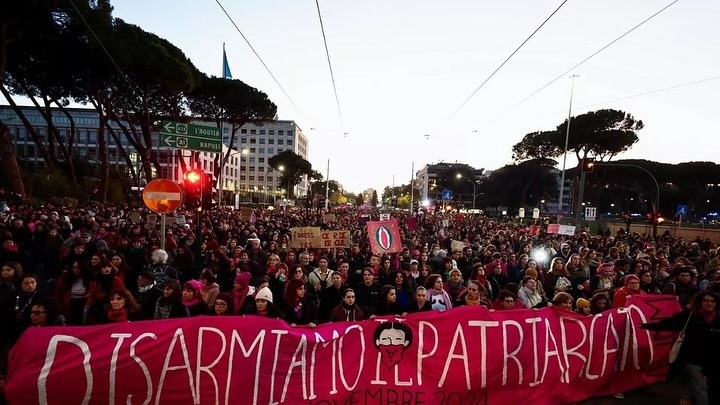
There are also countless local feminist groups. These groups, especially in small towns or specific regions, usually have a small number of militants and their influence is limited. Nevertheless, on historically important days like March 8 and November 25, all these structures come together and thousands of women take to the streets.
But the problem is that these demonstrations often turn into "one-off" mobilizations. There is a lack of strategic unity or sustained coordination between movements. This makes it difficult for the feminist struggle, for all its potential, to develop into a long-term, powerful political project.
Umay: While all these transformations are going on, there is also the pressure created by right-wing politics. How do you think this situation affects the achievements of the feminist movement?
Irene: The rise of the far right in Europe threatens many of the gains for feminist rights and gender equality. This means not only backsliding in rhetoric but also in practice. Especially in countries like Italy and Hungary, women's freedoms are more and more at risk. In Italy, the right to abortion is legally protected, but right-wing and Catholic rhetoric makes it virtually inaccessible. A large proportion of health workers exercise their right to conscientious objection, which makes it very difficult for women to access abortion. Women are stigmatized and have to travel to other cities or go to private clinics to access this service. This makes the right to abortion increasingly a privilege.
At Potere al Popolo, we take into account the vulnerable situation of migrant women and shape our migration policies from a gender perspective. We reject the current system that criminalizes migration and advocate for a decent reception model. We propose a system that protects the rights of foreign workers, reduces bureaucracy and eliminates the constant surveillance of irregular migrants.
In this context, we demand the facilitation of citizenship for migrants, the opening of safe humanitarian corridors and the extension of work permits. We also advocate for the removal of bureaucratic obstacles to the stay of unaccompanied minors and the closure of detention centers.
To effectively combat forms of exploitation such as trafficking in women and children, we prioritize the implementation of strong social policies, both nationally and internationally, to ensure the safety of victims and the protection of their families.

Umay: How does international feminist solidarity create a line of resistance against all these oppressive processes? What do you think about the cooperation between women's movements in Europe?
Irene: International alliances of feminist movements are more vital today than ever before. Especially at a time of the rise of the far right, the isolation of feminist struggles in individual countries accelerates the loss of rights. However, international solidarity is not only support across borders; it is also the key to the growth and persistence of struggles. In 2016, women's strikes against the abortion ban in Poland quickly spread to Italy and had a strong impact there as well. Such gains don't just stay within the borders of one country; they also inspire and mobilize women in other countries.
Every victory in one country brings a sense of "It is possible!" to women living elsewhere. This is why we at Potere al Popolo see solidarity not only as a form of support, but as a concrete means of struggle. Thanks to international networks, we are able to build a common resistance against common oppression. Growing the struggle without isolation, together and learning from each other is the most effective way to defend our rights.
- Self-Organizing University Collective
- We will not lose one more person!
- A feminist collective working specifically against barriers to access to abortion and contraception. It opposes conscientious objector practices in hospitals and provides information support to women on how to access these rights.
- A network to combat sexism and discriminatory practices in Italian universities. ↩︎
- A network to combat sexism and discriminatory practices in Italian universities. ↩︎
- Giorgia Meloni, Prime Minister of Italy. ↩︎