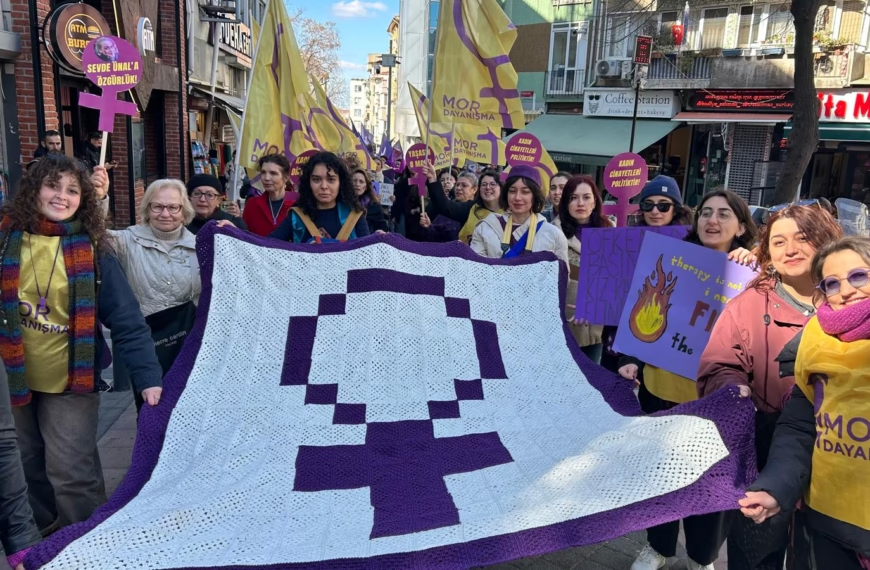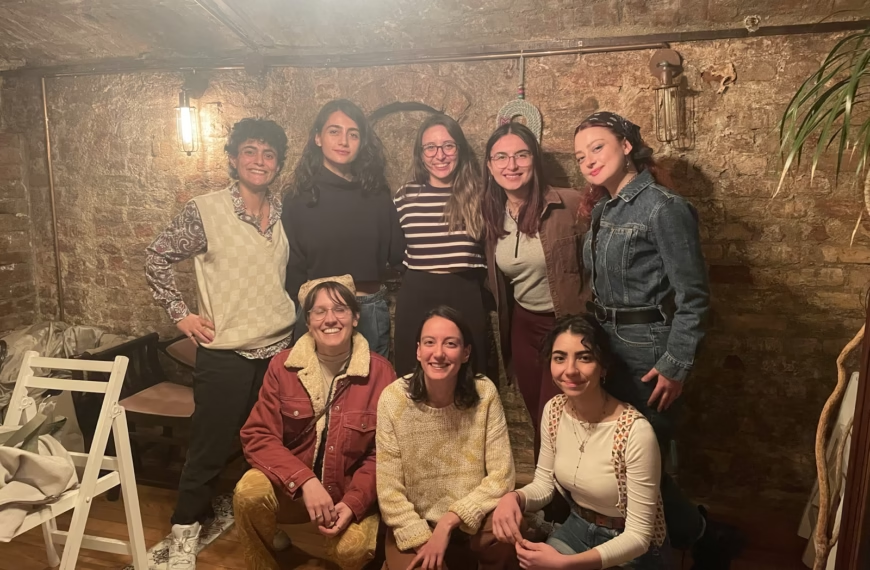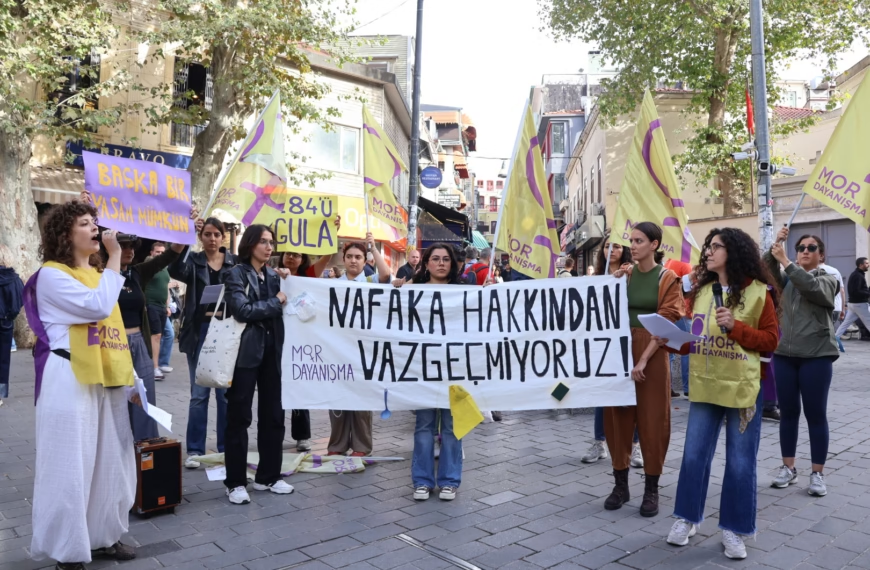

As Mor Dayanışma, in the wake of the Maraş-centered earthquake on the morning of February 6, we expanded our solidarity network with thousands of women from all over the country and the world who had earthquake experience, who saw how great the destruction was and did whatever they could, who grew solidarity in their neighborhood, workplace, circle of friends, who worked in humanitarian aid and disaster crisis management, and who volunteered in many of our activities.
We know that the Maraş earthquake, which affected 10 provinces and millions of lives, deserves an in-depth discussion of many issues—from pre-disaster precautions to environmental and urban planning policies, from the use of public resources to local government strategies. Although various studies and reports to date have provided data on the lack of preventive measures despite Turkey, being located in a seismic zone, the inefficient use of public resources, and the flawed practices during acute phases of disaster, we also know that any efforts made without considering gender inequality are incomplete and risk reproducing this inequality.
As women who have witnessed the inequality produced by gender-blind policies during past earthquakes in Gölcük, Elazığ, Van, and İzmir, we have once again, painfully seen that the patriarchal order renders women invisible or secondary in disaster situations.
This state of “conscious ignorance”, rooted in gender inequality, painfully revealed the need to talk about how and where women survivors were found under the rubble, how they should or should not be approached during initial rescue, and how basic humanitarian needs are often reduced to the distribution of sanitary pads for women.
As Mor Dayanışma, we have long experienced that it is not only through discussion but also through continuous action guided by feminist policies, and the persistent mobility of organized women's struggle at the local level, that gender inequality can be challenged, and we have achieved tangible gains. The feminist policies we practiced after the İzmir and Van earthquakes in the pre-, during, and post-disaster phases, have served as a guide in our solidarity with survivors of the Maraş earthquake.
As a women's association that has experience in the field, we have seen that gender inequality and male-dominated policies that deepen inequality make women more vulnerable in disaster situations.
We have carried out the steps of survival, recovery, solidarity, empowerment, and organization together with the political feminist subjectivation process of women.